Canada
Books
"In a fully developed bureaucracy there is nobody left with whom one can argue, to whom one can present grievances, on whom the pressures of power can be exerted. Bureaucracy is the form of government in which everybody is deprived of political freedom, of the power to act; for the rule by Nobody is not no-rule, and where all are equally powerless, we have a tyranny without a tyrant."
~ Hannah Arendt
~ Hannah Arendt
"Anyone who doesn't take truth seriously in small matters cannot be trusted in large ones either."
~ Albert Einstein
~ Albert Einstein
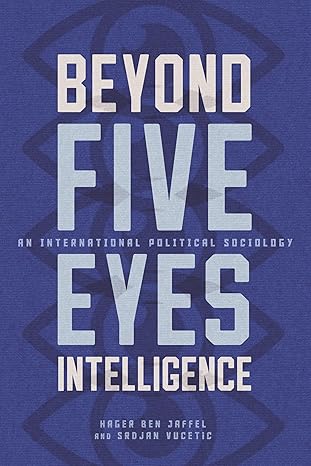
"Beyond Five Eyes Intelligence takes readers inside one of the world's most secretive networks, revealing how it operates and why it matters for global politics - and for the future of democracy.
Drawing on declassified archives and whistleblower testimony, Hager Ben Jaffel and Srdjan Vucetic debunk three myths about the Five Eyes: that it is a closed alliance of five nations [Australia, Canada, New Zealand, the UK & the USA], that it operates under meaningful democratic oversight, and that it serves only the political agendas of national leaders. They uncover a strikingly different reality. No longer confined to its founding members, Five Eyes collaboration reaches beyond intelligence and counterespionage to counterterrorism, cybersecurity, and other areas. Accompanying this new political configuration is a growing role of technology corporations and their unchecked powers.
Beyond Five Eyes Intelligence exposes how this alliance embeds its own politics, shaped by the manifold social relations that structure international politics - from imperial entanglements and bureaucratic feuding to clashes with rival governments and transnational movements. The network emerges not as a relic of Cold War espionage but as a formidable, enduring, and deeply influential force shaping the modern world."
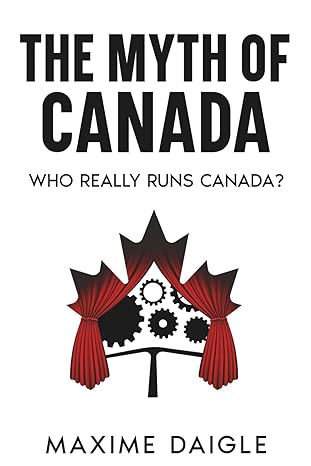
"Canada is often sold as a "fair and just" nation—stable, moderate, democratic, and well governed. Elections happen. Parliaments sit. Laws are passed. The rituals of democracy continue. So why do so many Canadians feel powerless, unheard, and increasingly disillusioned—watching governments change while outcomes stay the same?
The Myth of Canada argues that the problem is not a lack of better leaders or better policies. The problem is structural. Canada's political architecture was built long before ordinary citizens had meaningful participation, and it was designed to preserve continuity—not to obey public will. Over time, participation expanded, but real authority remained insulated behind party discipline, bureaucratic permanence, legal constraints, corporate influence, media framing, and international agreements that operate beyond the reach of elections.
The only responsible path forward is to redesign the system itself—building institutions that distribute power, enforce accountability, require competence, eliminate private influence pathways, and align governance with the realities of the twenty-first century rather than the assumptions of the nineteenth.
This is not a call for chaos. It is a call for clarity. If you are fed up with politics as theatre, tired of being told to "just vote," and ready to understand why the system keeps producing the same outcomes—this book is for you. Stop defending the story. Start examining the structure."
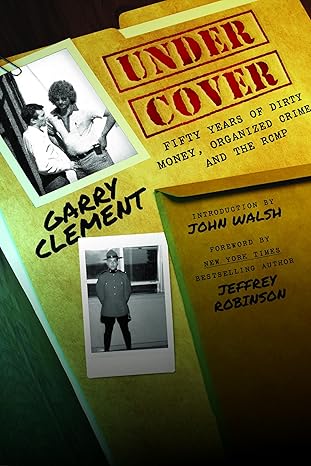
"Garry Clement is a national treasure. He's spent his life in service to Canada, and I guarantee he knows more about international organized crime, drug trafficking, money laundering and the state actors—China, Iran, Mexico, and Russia—who today pose a major national security threat to Canada. This book should be required reading by every politician and bureaucrat in Ottawa and everyone else who cares about the future of this country." ~ Jeffrey Robinson, author of The Laundrymen.
As "Bobby Spade," Garry infiltrated Vancouver's deadliest drug syndicates. What followed wasn't a hero's welcome—it was exile, death threats, and systemic betrayal. When a Crown misstep led to a contract assassin being released, Clement's life—and Canada's justice system—was irrevocably changed.
In this new edition, Garry reveals never-before-published insights into:
- His role as Chief Anti-Money Laundering Officer at VersaBank, and what banks are missing;
- The ongoing failures of FINTRAC and federal regulators to stem the flow of illicit money;
- The RCMP's internal decay—exposed further by the Phantom Secure scandal and the Cameron Ortis treason case;
- How organized crime, foreign influence, and political cowardice have infiltrated Canada's democratic institutions;
- The damning truths buried in the Sidewinder report, silenced by CSIS and ignored by Ottawa;
With the precision of an investigator and the soul of a patriot, Garry Clement delivers a chilling message: Canada is wide open for corruption—and our leadership is asleep at the wheel."
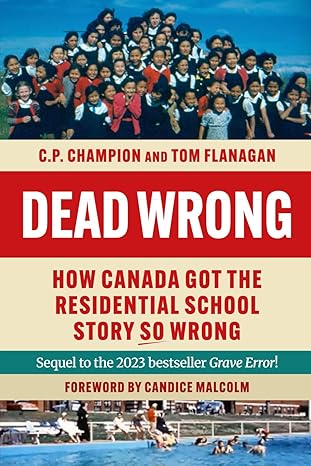
"Dead Wrong is a follow-up to the book Grave Error [see below]. Why is another book needed? Simply because the struggle for accurate information continues. Very few of those who spread unsubstantiated rumours about "discoveries" of "unmarked graves" holding the remains of "missing children" at Kamloops and other Indian Residential Schools have admitted their errors. Dead Wrong gives the straight story about episodes involving the Kamloops Narrative, such as:
- The shocking unwillingness of the New York Times to retract its headline about "mass graves" at Kamloops;
- The attempt of the city council at Quesnel, BC, to drive the mayor from office because his wife gave away ten copies of Grave Error;
- The firing of high school teacher Jim McMurtry because he told students the truth—that most students who died at residential schools succumbed to TB (tuberculosis);
- The so-called documentary Sugarcane, which was nominated for an Oscar even though it was riddled with errors about St. Joseph's Residential School at Williams Lake, BC;
- The attempt of the Law Society of BC to entrench the Kamloops Narrative in its educational materials, even though the falsehoods were pointed out by member Jim Keller.
All this and much more is contained in Dead Wrong, which picks up where Grave Error left off. If you liked Grave Error, you'll love Dead Wrong."
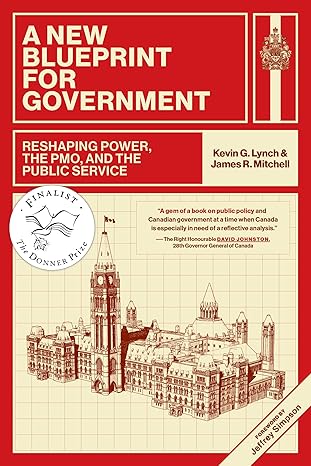
"Canada is struggling. Our growth is anemic, our standard of living is stagnant, our housing is unaffordable, and our health care system is nearing a breaking point. To make matters worse, the government fails to deliver core services and avoid management fiascos like the ArriveCan and Phoenix scandals.
These failures are systemic and interconnected. What connects them is a fatal flaw in how the federal government operates, makes decisions, and takes action. Power has shifted from Cabinet to the Prime Minister and Prime Minister's Office with political staff taking on a larger role relative to the Public Service, and parliament has lost its ability to call the elected government to account.
Authors Lynch & Mitchell offer an expert's perspective on how to restore accountability and rebuild a culture of excellence by proposing a new blueprint for reshaping government. As Canadians face uncertainties at home and abroad, these practical and straightforward recommendations offer a path forward to ensure our nation's prosperity."
"The country stands at risk. Even before Donald Trump returned to the U.S. presidency, brandishing tariffs and threats of annexation, Canada had started to crack. Year after year of decisions deferred, problems ignored, and cans kicked carelessly down the road have created dangerous fissures.
Stifling regulations drag down the economy. Younger people feel angry and alienated by dizzying housing prices and gig jobs. Regional tensions threaten unity in both Quebec and the Prairies. The immigration system is broken. And Canada stands alone, having failed to pay the cost of defending itself.
Will the Laurentian elites continue to misgovern, or are there alternatives? The country is at a breaking point. Canadians must act to save it before they lose it. Provocative, urgent, and unapologetically candid, Breaking Point will ignite debate, dominate political discourse, and become the definitive guide to understanding what is shaping up to be one of the most turbulent eras in Canadian history."
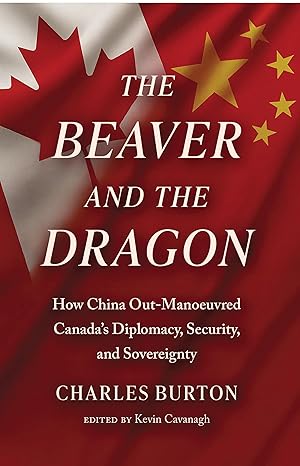
"For decades, Canada believed it could gently shape China into a responsible global actor through diplomacy, commerce, and cultural exchange. But as this clear-eyed, searing account reveals, it was China that ended up reshaping us. This book takes readers inside Canada's most fateful geopolitical miscalculation. Drawing on a lifetime of engagement — from dorm rooms at Fudan University to behind-closed-doors diplomacy in Beijing — Burton chronicles China's strategic ascent and the naïveté that allowed it to happen within Canada's political and corporate boardrooms.
From Tiananmen Square to hostage diplomacy, this book captures the history we lived through but failed to understand that has allowed China and Beijing's authoritarian model to quietly infiltrate all of Canada's institutions including the halls of parliament. These essays, written in real time across four Canadian governments, expose the illusions of engagement and the emergence of an authoritarian power that seeks to dominate the 21st century at democracy's expense."
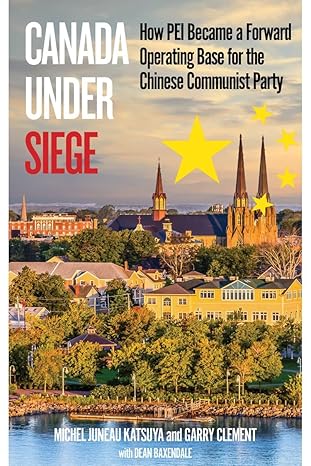
"Through a series of disturbing leads, veteran investigators Michel Juneau-Katsuya (CSIS) and Garry Clement (RCMP) follow the money, land deals, and political alignments that suggest Prince Edward Island may have become something more than a rural outpost—it may be a case study in how foreign influence embeds itself deep within democratic systems.
Across interviews with whistleblowers, activists, and security insiders, Canada Under Siege uncovers unanswered questions and disturbing patterns—from aborted RCMP probes to quiet land transfers, from surveillance of diaspora communities to stalled legislation like Bill C-70.
Why did CSIS warnings go ignored? Why is there still no foreign agent registry in Canada? What happens when political convenience outweighs national security?
This is not a book of questions but that of conclusions. Most importantly it is a dossier of questions—serious ones—about the fragility of democratic institutions, the nature of infiltration, and how a tiny province may have quietly become the front line of a much larger conflict. The people and politicians who embraced both Chinese investment and monastic virtue may find that they made a faustian bargain that will impact the island for generations."
"Andrew Coyne, one of Canada's most esteemed political thinkers, delivers a powerful exposé of the nation's crumbling democratic institutions.
With characteristic wit, insight, and rigor, Coyne dismantles the comforting myths Canadians tell themselves about their political system, revealing a parliamentary structure eroded by unaccountable leaders, disempowered MPs, manipulated elections, and systemic dysfunction. The Crisis of Canadian Democracy is both a wake-up call and a call to action, offering compelling solutions to restore genuine self-government to Canadian politics. Essential reading for leaders, citizens, and anyone who cares about the future of democracy in Canada—or anywhere else."
"Since legalizing euthanasia and assisted suicide as Medical Assistance in Dying (MAiD) in 2016, Canada has witnessed an internationally unprecedented expansion of the practice, making it the country with the highest number of MAiD deaths.
Initially introduced to relieve suffering in a broad end-of-life context, the law expanded quickly to make MAiD available to disabled Canadians not approaching their natural deaths. MAID will also become legal for sole reasons of mental illness sometime after 2027, and there are plans to expand it further to include minors and advance requests. From a cross-disciplinary perspective, including contributions from authors with lived experience, Indigenous perspectives, and expertise in medicine, mental health, disability, law, and ethics, Unravelling MAiD in Canada challenges readers with the ethical, medical, legal, societal, and disability justice rights concerns that have arisen in regard to this hotly debated irreversible practice.
Canada now provides more state-facilitated euthanasia and assisted suicide than any other country. This volume puts forth critical reflections and valuable insights as more jurisdictions consider their own assisted dying laws and policies."
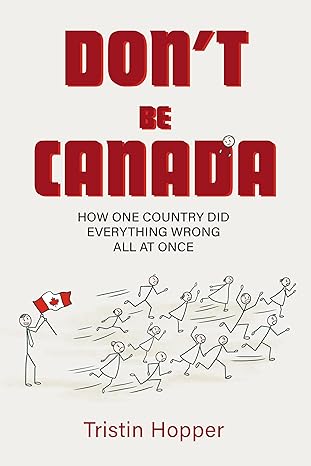
"How Canada, a country once admired for its stability and moderation, became a global cautionary tale.
Drawing from real headlines, deep research, and extensive interviews, acclaimed journalist Tristin Hopper uncovers the bizarre missteps and policy experiments that have helped Canada set new global standards for disfunction. The examples are legion: the real estate bubble that never bursts, Orwellian internet regulations, harm reduction policies that escalate harm, official health guidelines that recommended the use of glory holes in a pandemic, and a runaway euthanasia system that inspired the Wall Street Journal to declare, "Welcome to Canada, the Doctor Will Kill You Now."
As sobering as it is comic, this book examines the cascading consequences of extreme policies and tells the tragic story of a country that took its wealth, tolerance, and functionality for granted."
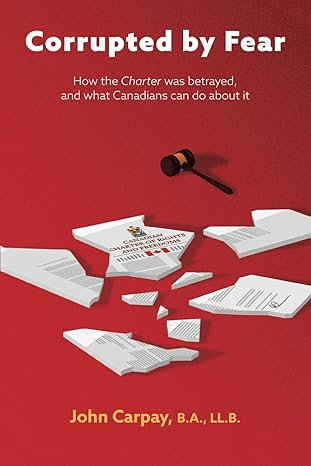
"Corrupted by Fear, through the eyes of constitutional lawyer John Carpay, reviews the evidence before courts in Charter challenges to Covid lockdowns. Carpay explains how harsh measures that turned our world upside down were not subjected to proper scrutiny. He explores crucial lessons Canadians can learn from history, particularly the collapse of democracy and human rights into fascism in Europe in the 1930s. He concludes with an action plan that Canadians can use to resist and defeat future attacks by government against our rights and freedoms.
John Carpay is the Founder and President of the Justice Centre for Constitutional Freedoms. Born in the Netherlands, he grew up in British Columbia. Fluent in English, French, and Dutch, he earned his B.A. in Political Science at Laval University in Quebec City, and his LL.B. from the University of Calgary. John has devoted his legal career to defending the Charter rights and freedoms of Canadians, and has spent decades advocating for freedom in the courts of law and the court of public opinion."
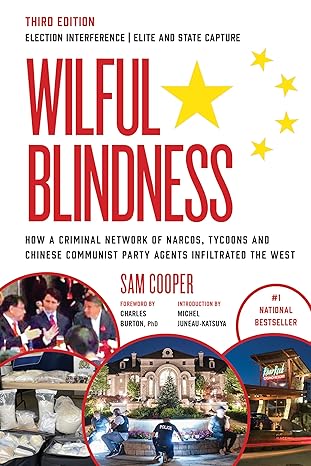
"Hybrid Warfare does not involve firing a single shot but rather winning the hearts and minds of those in power to influence the decision-making apparatus. Soon, billions of dollars in Chinese investments poured into North America's Pacific coast. British Columbia's government casinos became conduits for global criminals, facilitating the influx of deadly narcotics into Canada and laundering billions of drug money into Vancouver's real estate market.
A web of accomplices—revenue-hungry governments, casino and real estate firms with connections to dubious offshore wealth, complicit lawyers and bankers, and an unresponsive RCMP—allowed organized crime to flourish. As dirty money inflated Vancouver's real estate market, the social toll became evident: a fentanyl crisis ravaging North American cities, declining life expectancy in Canada, and an unattainable housing market for the middle class. But the story extends beyond real estate and overdoses.
This book is a testament to Cooper's relentless pursuit of the truth, from the shocking revelations of money laundering in Vancouver casinos to the high-stakes real estate deals masking illicit activities. The explosive NSICOP report from parliament suggests MPs from the NDP, Liberals and Conservatives have been compromised and may well be committing treason through their Wilful Blindness or direct engagement with PRC agents if only we had laws to prosecute them. Through the pages of Wilful Blindness, he reveals the probable suspects, from backbench MP's right to the PM's office. Renowned for his award-winning journalism, Cooper's work has forced a public conversation about corruption in Canada and beyond."
"An alarming account of how autocracies work together to undermine the democratic world, and how we should organize to defeat them.
Nowadays, autocracies are underpinned not by one dictator, but by sophisticated networks composed of kleptocratic financial structures, surveillance technologies, and professional propagandists, all of which operate across multiple regimes, from China to Russia to Iran. Corrupt companies in one country do business with corrupt companies in another. The police in one country can arm and train the police in another, and propagandists share resources and themes, pounding home the same messages about the weakness of democracy and the evil of America.
International condemnation and economic sanctions cannot move the autocrats. Even popular opposition movements, from Venezuela to Hong Kong to Moscow, don't stand a chance. The members of Autocracy, Inc, aren't linked by a unifying ideology, like communism, but rather a common desire for power, wealth, and impunity. In this urgent treatise, which evokes George Kennan's essay calling for "containment" of the Soviet Union, Anne Applebaum calls for the democracies to fundamentally reorient their policies to fight a new kind of threat."
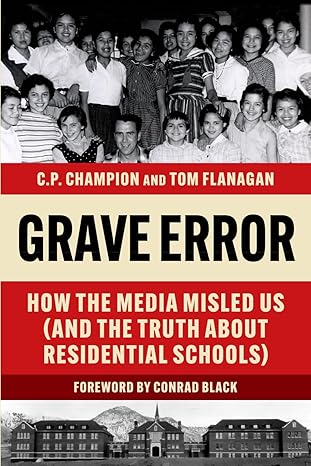
"After the announcement by the T'kemlups First Nation of the "discovery" of unmarked graves at Kamloops, many politicians, Indigenous leaders, and media have thrown aside balance, restraint, and caution, turning truth into a casualty. Public discussion of Indian Residential Schools issues is now filled with the following assertions, all of which are either totally false or grossly exaggerated:
- Thousands of "missing children" went away to residential schools and were never heard from again;
- These missing children are buried in unmarked graves underneath or around mission churches and schools;
- Many of these missing children were murdered by school personnel after being subjected to physical and sexual abuse, even outright torture;
- The carnage is appropriately defined as genocide;
- Many human remains have already been located by ground-penetrating radar, and many more will be found as government-funded research progresses;
- Most Indian children attended residential schools;
- Those who attended residential schools did not go voluntarily but were compelled to attend by federal policy and enforcement;
- Attendance at residential school has traumatized Indigenous people, creating social pathologies that descend across generations;
- Residential schools destroyed Indigenous languages and culture.
The flight from truth makes true Reconciliation impossible.
Getting beyond the "Grave Error" and recovering a more balanced picture of residential schools is the only road to genuine Reconciliation.
This book has been followed up by Dead Wrong: How Canada Got the Residential School Story So Wrong, published Nov. 27, 2025.

"We have observed a phenomenon of the surreal, sometimes inane, often unprecedented and unusual public health measures taken over the roughly three-year pandemic period being "memory holed", where the mind completely fogs over. Many times in the course of writing this book, we have messaged one another upon unearthing one public policy absurdity upon another: the City of Toronto taping off cherry blossoms, Quebec requiring unvaccinated people to be chaperoned in plexiglass carts through the essential aisles of big-box stores."

"This book deals with the political and social dimensions of the reaction to COVID-19. The moral panic accompanying and compounding the medical and public health responses to COVID remains a prominent feature of Canadian public policy, even after three years. We explore the question of why policy makers persist in promoting fear. This is a political question, not a question of epidemiology. Without disputing the seriousness of COVID-19 for some Canadians, we find the overall national response to COVID has been excessive.
The result has been an increase in the power of experts (and medical bureaucrats). Hannah Arendt (On Violence) observed that bureaucratic tyranny is the worst because its power is impersonal, anonymous, and cannot be easily undone. The ambitions of bureaucrats and politicians in Canada are well served by the introduction of this emergency mode of governance. We hope that the arguments of this book will help Canadians to recognize and resist the permanent establishment of bureaucratic tyranny."

"Volumes 1-3 of the Clash of the Two Americas, we were introduced to the two opposing currents shaping all of US history from 1776 to the present. In this fourth volume of the series you will be introduced to the origins and structure of oligarchical operations at a level of depth and resolution you have never imagined possible. This volume is divided into eight acts, with the first section revealing the scope of Rhodes Scholar penetration of the US government across the 20th century followed by a broad overview of various "conspiratory theories" that have been created to deflect the minds of truth seekers away from any causal nexus of history."

"In 2021, Canada and the world welcomed a new revolutionary technology that was supposed to end the COVID-19 pandemic. Unfortunately, the benefits we may have achieved from this medical breakthrough was overshadowed by the harms it created on our society.
Governments and health authorities made many mistakes over the course of the pandemic. Experts have already determined that many policies implemented over the course of our fight to flatten the curve, ultimately proved more harmful than good. These policies will compete for the number two spot for worst public health strategies of the 21st century. But the number one spot won't be in question. The hatred and misunderstandings that our experts and authorities allowed and encouraged in the latter half of 2021 and into 2022, may go down as the worst public health disaster of our lifetime.
In this book, Réjean Venne provides a firsthand account of how it all began and what led to our toxic relationship with vaccination statuses. Venne provides a balanced perspective on the polarizing debate over vaccines. He documents the most shocking policies and public health messaging that Canadians faced and attempts to understand what we accomplished by dividing society."

"Un réquisitoire saisissant contre les exploits anticonstitutionnels et le programme inhumain du premier ministre François Legault sous le couvert de la "santé publique" et de la censure dans une pandémie inventée.
Dans François Legault et Le Programme Totalitaire de Vaccins Biométriques de la Covid-19, Peter Tremblay et le Dr John Chang enquêtent sur les crimes du gouvernement du Québec au cours de la pandémie. Peter Tremblay et John Chang explorent comment le Québec, ainsi que d'autres gouvernements au Canada, a trahi son devoir de service aux citoyens, se transformant en une entité au service d'une cabale qui travaille avec des intérêts biotechnologiques et pharmaceutiques dans la poursuite du profit et de la domination."

"Peace, order and good government. That is what the British founders wanted for the newly formed Confederation of Canada. The British North America Act of 1867 created the union of the four British provinces in North America, Ontario, Quebec, New Brunswick and Nova Scotia, under a single federal government, under a Constitutional Monarchy with a Westminster style Parliament. The document laid out the responsibilities of the federal and provincial governments and a blueprint for the creation of new provinces in the territories to the north and west.
The Canadian Constitution of 1982 legally brought the Constitution of Canada to Canada itself. Formerly the Canadian constitution (BNA 1867) could only be amended by the Parliament in Great Britain. The new Constitution of 1982 introduced a charter of rights and freedoms, that were to be enjoyed by Canadian citizens.
These documents make up the legal foundation for the country we know as Canada. They were heavily influenced by the Westminster model of parliamentary democracy, and the Anglo-Saxon political traditions like the Magna Carta, and the Bill of Rights 1687."

"Over the last fifty years, Canada's public schools have been absorbed into a modern education system that functions much like Max Weber's infamous iron cage. Crying out for democratic school-level reform, the system is now a centralized, bureaucratic fortress that, every year, becomes softer on standards for students, less accessible to parents, further out of touch with communities, and surprisingly unresponsive to classroom teachers.
Exploring the nature of the Canadian education order in all its dimensions, The State of the System explains how public schools came to be so bureaucratic, confronts the critical issues facing kindergarten to grade 12 public schools in all ten provinces, and addresses the need for systemic reform. Going beyond a diagnosis of the stresses, strains, and ills present in the system, Paul Bennett proposes a bold plan to re-engineer schools on a more human scale as the first step in truly reforming public education. In place of school consolidation and managerialism, one-size-fits-all uniformity, limited school choice, and the "success-for-all" curriculum, Bennett advocates for a new set of priorities: decentralize school governance, deprogram education ministries and school districts, listen to parents and teachers, and revitalize local education democracy."

"This fourth volume of the Untold History series treats the imperial agenda Controlling Canada since 1867. We tackle an in depth analysis of Canadian History as a branch of Universal history as it was shaped by the Round Table Movement and Fabian Society in opposition to a republican current that had electrified Canada (as well as much of the world) in the decades following Lincoln's victory over the British-directed slave power. Much of the 20th century's most important developments, from social reforms, assassinations, manufactured wars and more are given a new meaning once light is shed upon the invisible hands which artificially manipulated Canada in the world throughout the previous century."
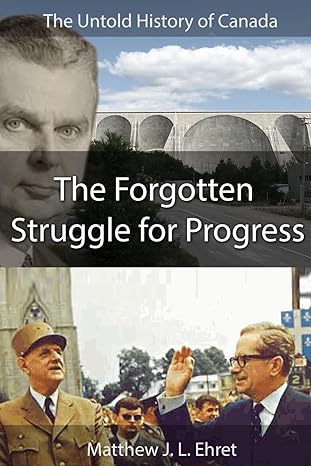
"In this third volume of the series, we introduce the story of several leading nation builders of the 20th century whose lives and struggle have been obscured by establishment historians. We document for the first time in one location the interconnected networks of B.C.'s Premier W.A.C. Bennett, Canada's "Minister of Everything" C.D. Howe, Prime Minister John Diefenbaker, and Quebec's Premiers Maurice Duplessis, Paul Sauve and Daniel Johnson who were all aided by republican leaders of America and France during the post WWII period. These figures conducted a battle with the Rhodes Scholar-infested networks which have come to be known as the Deep State in our modern era, and in spite of their limitations, these figures all distinguished themselves by their genuine patriotism and love of scientific and technological progress.Providing an additional dimension to this story of Canada's untold history, researcher Richard Saunders has contributed a chapter entitled "The Ugly Truth of General Andrew Macnaughton". This important research ties into the Canadian aspect of the assassination of John F. Kennedy and sabotaging of the great North American Water and Power Alliance in a surprising manner as the myth of the heroic Macnaughton is put to rest."
"When the field of Canadian history underwent major shifts in the 1990s, international history became marginalized and the focus turned away from foreign affairs. Over the past decade, however, the study of Canada and the world has been revitalized.
Undiplomatic History charts these changes, bringing together leading and emerging historians of Canadian international and transnational relations to take stock of recent developments and to outline the course of future research. Following global trends in the wider historiography, contributors explore new lenses of historical analysis - such as race, gender, political economy, identity, religion, and the environment - and emphasize the relevance of non-state actors, including scientists, athletes, students, and activists. The essays in this volume challenge old ways of thinking and showcase how an exciting new generation of historians are asking novel questions about Canadians' interactions with people and places beyond the country's borders.
From human rights to the environment, and from medical internationalism to transnational feminism, Undiplomatic History maps out a path toward a vibrant and inclusive understanding of what constitutes Canadian foreign policy in an age of global connectivity."

"A tension caused by a clash in two opposing world views has resulted in a potential unseen for many decades and which carries with it the foundations both for great hope in a beautiful future for all mankind but also the danger of thermonuclear war and chaos. Historically, these two opposing currents were known as "republican-humanist" on the one hand and "imperial-oligarchical" on the other. Today's expression of this historic conflict is represented by the resurgence of nationalist leaders defending "multi-polar" world models based upon cooperation around common goals versus a "unipolar" Hobbesian model of "managed chaos". The former has taken expression with China's 2013 announcement of the "New Silk Road' (aka: Belt and Road Initiative) which has united with Russia's Eurasian Economic Union which together with the BRICS and Shanghai Cooperation Organization have taken a collective stand against the neo-liberal/neo-conservative order which has threatened to bring about world war III. These nations have committed to a system defined by long term thinking, great infrastructure projects and unbounded growth."
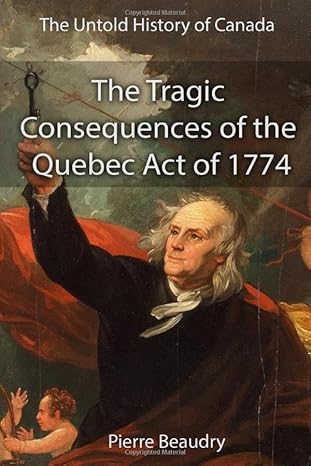
"This book answers the following questions (and more):
- Why is Canada the only Monarchy in all of the Americas?
- Why did the Quebecois fail to accept Benjamin Franklin's offer to become the 14th colony to declare independence in 1776?
- Why has Benjamin Franklin's role in shaping Canada's first newspaperand Postal Service been all but lost from history?
- Who were the heroes of Quebec who defied the Anglo-French oligarchy in order to join Washington's mission?"
"The Canadian Constitution makes Canada's Constitution readily accessible to readers. It includes the complete text of the Constitution Acts of 1867 and 1982 accompanied by an explanation of what each section means, along with a glossary of key terms, a short history of the Constitution, and a timeline of important constitutional events. The Canadian Constitution explains how the Supreme Court of Canada works, and describes the people and issues involved in leading constitutional cases."
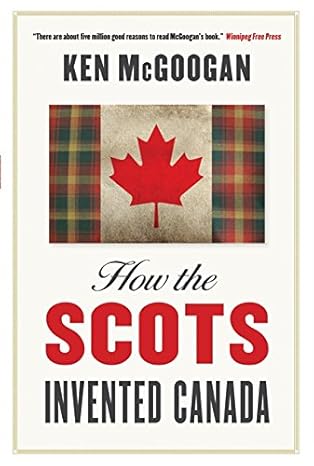
"Award-winning author Ken McGoogan has written a vivid, sweeping narrative showcasing more than sixty Scots who have shaped Canada. They include fur traders Alexander Mackenzie and the "Scotch West-Indian" James Douglas, who established national boundaries; politicians John A. Macdonald and Nellie McClung, who created a system of government; and visionaries Tommy Douglas, James Houston, Doris Anderson and Marshall McLuhan, who turned Canada into a complex nation that celebrates diversity. McGoogan toasts Robbie Burns, recalls the first settlers to wade ashore at Pictou, Nova Scotia, and celebrates such hybrid figures as the Cherokee Scot John Norton and Cuthbert Grant, father of the Métis nation. In How the Scots Invented Canada, Ken McGoogan uncovers the Scottish history of a nation-building miracle."


How can you spread the message that They Lied?
Stay up to date with our Newsletter
Click here to read it,
or subscribe below ...
or subscribe below ...
Click here to STOP the Globalist Agenda
Click here to support our work.
Click here to email us at contact@theylied.ca